The Role of Action Verbs in Effective Communication

Action Verbs: A Comprehensive Explanation Action verbs are words that describe actions, activities, or states of being performed by a subject. They are the backbone of dynamic and engaging sentences, conveying what someone or something does. Unlike linking verbs (e.g., “is,” “seem”) or helping verbs (e.g., “has,” “will”), action verbs express physical or mental actions,…

Read More

Types of Verbs: A Comprehensive Overview

Action Verbs Describe physical or mental actions. Examples: run, think, write, jump. Subtypes: Transitive: Require a direct object (e.g., She kicked the ball). Intransitive: Do not require an object (e.g., He runs). Linking Verbs Connect the subject to additional information (e.g., a state of being or condition). Examples: be, seem, appear, become. Example: She is…

Read More

Proper Noun and It’s Explanation of Proper Nouns

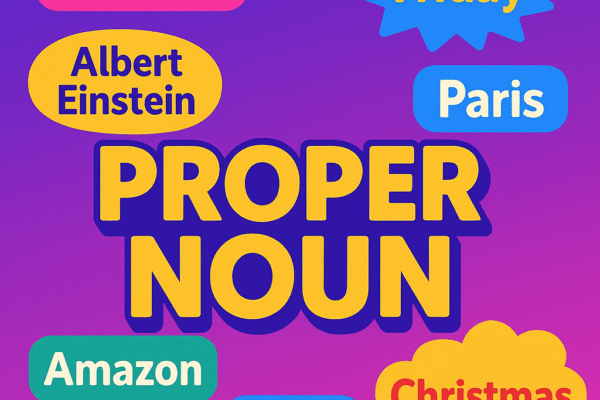
A proper noun is a specific type of noun that names a particular person, place, thing, or idea. It always begins with a capital letter, regardless of its position in a sentence, to distinguish it from common nouns, which refer to general items or categories. Proper nouns are unique identifiers, pointing to a specific entity…

Read More

What is a Noun? Types of Nouns with examples

What is a Noun? A noun is a word that represents a person, place, thing, idea, or quality. It is one of the main parts of speech and serves as the subject or object in a sentence. Types of Nouns: Common Noun: Represents general items rather than specific ones. Examples: car, city, teacher, river. Proper…

Read More

Noun and It’s Definition with Examples

Noun definition Nouns are words that identify people, places, things. Examples: People: soldier, Alan, cousin, lawyer Places: house, London, factory, shelter Things: table, London Bridge, chisel, nitrogen, month, inch, cooking Animals: aardvark, rat, shark, Mickey Ideas: confusion, kindness, faith, Theory of Relativity, joy

Read More